

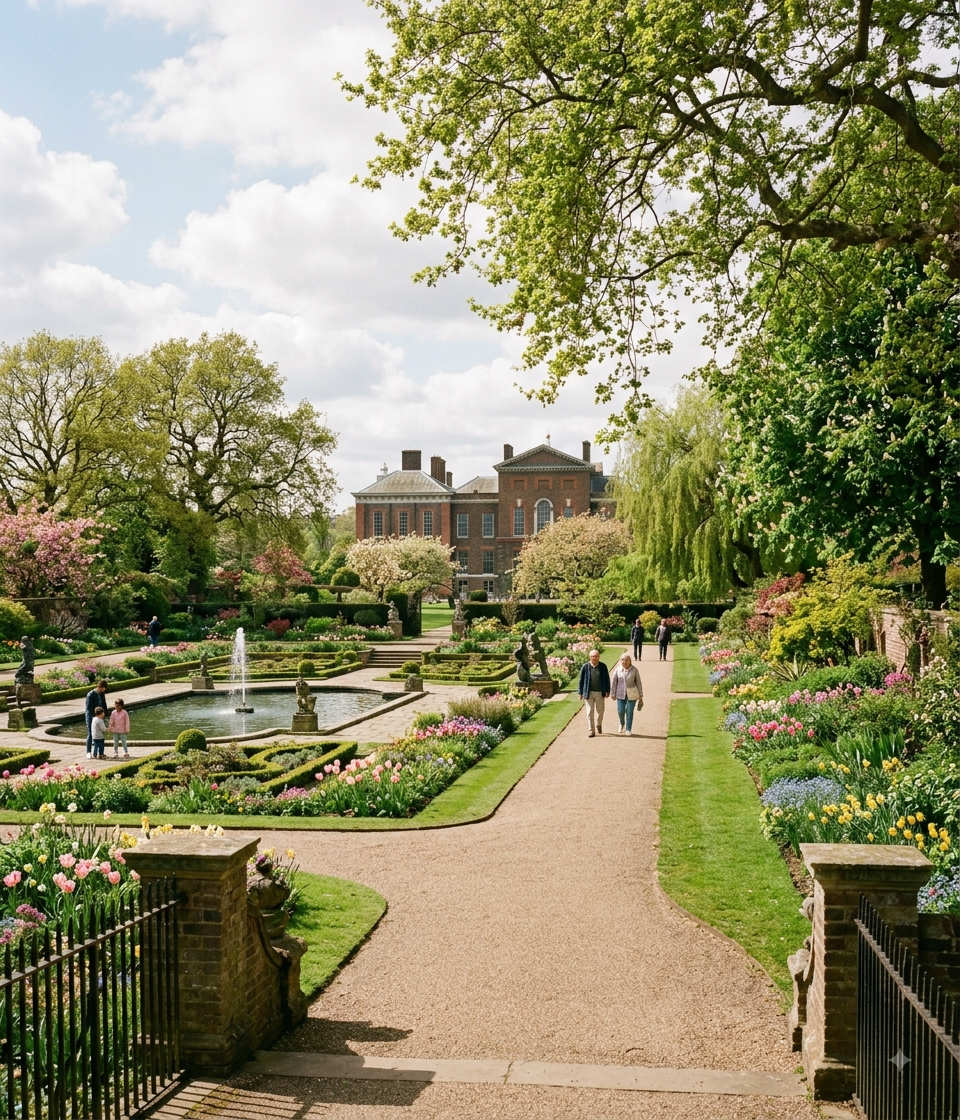
Kensington Gardens
Kensington Gardens has a fascinating royal history and was originally established as a private recreational space for the monarchy. Although the gardens are now one of London’s most popular public green spaces, their character and landscape have been shaped over several centuries by royal residents and their vision for the estate.
For more than a century, the area formed part of the neighbouring Hyde Park. This changed in 1689, when King William III and Queen Mary II decided to create a separate royal garden surrounding their London residence. After acquiring Nottingham House, the monarchs transformed the property into what became Kensington Palace and established it as their principal London residence.
The creation of Kensington Gardens was closely connected with King William III’s personal preferences. Seeking an environment that reminded him of his Dutch homeland, Queen Mary commissioned a formal garden inspired by the traditional Dutch style. The resulting landscape featured carefully planned avenues, ornamental planting, and structured garden design, creating a setting that complemented the newly established royal residence.
Over time, Kensington Gardens continued to evolve as successive royal residents introduced new ideas and landscaping features. The gardens were gradually transformed from a private royal retreat into a beautifully designed public park, while retaining many reminders of their royal origins. Today, visitors can enjoy its expansive lawns, elegant pathways, mature trees, and historic surroundings while exploring an important chapter of London’s royal heritage.
The gardens provide a peaceful contrast to the busy streets of central London and offer visitors an opportunity to experience both nature and history in one setting. With its connection to Kensington Palace and its distinctive royal landscape, Kensington Gardens remains an important destination for those interested in London’s history, architecture, and green spaces.